
What Causes PMM2‑CDG
Changes to the PMM2 gene lead to problems with how proteins function in patients with PMM2-CDG.
The Role of the PMM2 Gene
The PMM2 gene is like an instruction book in your body. It tells your cells how to make a specific enzyme called PMM2, or phosphomannomutase 2, that is responsible for making a key sugar called mannose-1-phosphate, or M1P. When there are errors in this gene, the PMM2 enzyme does not work correctly, causing the condition PMM2-CDG. Patients with PMM2-CDG have less M1P, which leads to glycans not being built as they should be. This creates problems with how proteins function across the body, leading to many different symptoms.
How PMM2-CDG Is Inherited: An Autosomal Recessive Pattern
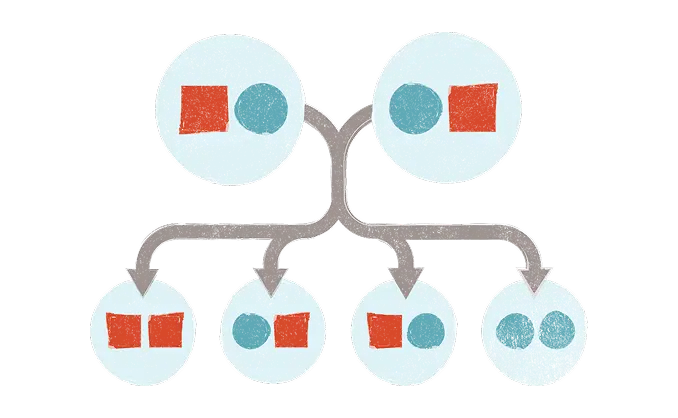
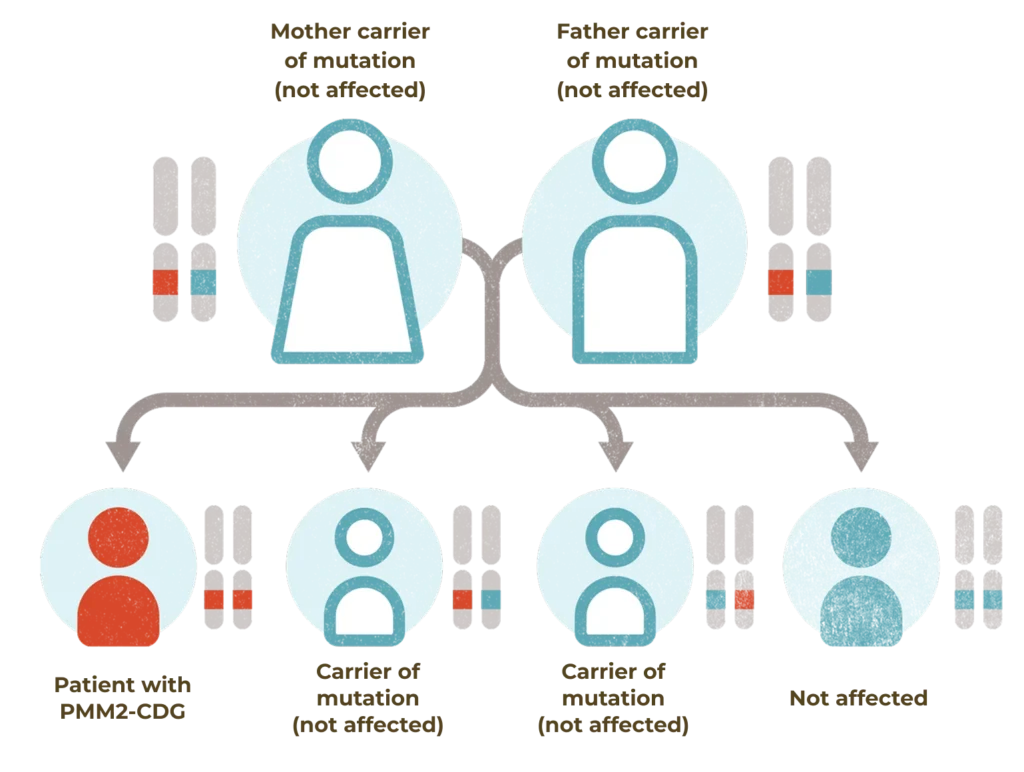
Any person who carries one changed gene is considered a carrier. Carriers don’t have symptoms, but they can pass the changed gene to their children. If both parents are carriers, each child has a 25% (1 in 4) chance of having PMM2-CDG. This chance is the same for every pregnancy.
The Importance of Genetic Testing
Genetic testing is the gold standard to confirm diagnosis of PMM2-CDG. An accurate diagnosis is critical to ensure proper symptom management and help people with PMM2-CDG live their best lives.
A simple genetic test using blood, saliva, or cheek swabs can help your family understand if someone has mutations in the PMM2 gene that causes PMM2-CDG.
Patient Spotlight

“Cerebral palsy was her medical diagnosis for many years. After a decade of searching … we finally found the answers we were seeking when Mayté was referred to a geneticist in San Antonio, Texas. After a profound explanation of what PMM2-CDG was and how Mayté had inherited it, I finally understood everything.”
– Caregiver of Mayté, a patient living with PMM2-CDG