
Understanding PMM2‑CDG
PMM2-CDG (phosphomannomutase 2-congenital disorder of glycosylation) is a rare genetic condition that runs in families. It is a multi-systemic disorder, meaning it can affect organ systems throughout
the body.
While the disease is rare, you’re not alone on this journey.
Key Facts About PMM2‑CDG

Around 14,000 people in North America and Europe have
PMM2-CDG, making it the most common congenital disorder of glycosylation, or CDG
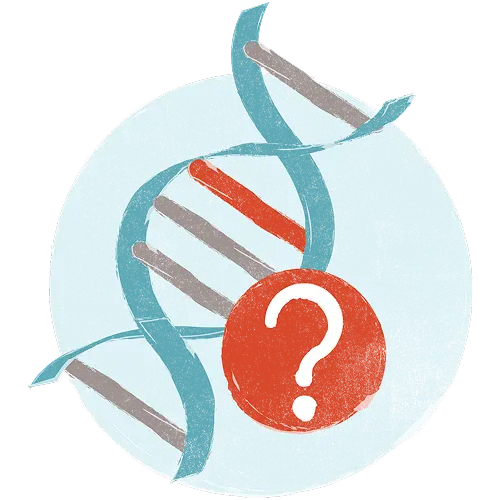
When the PMM2 gene is changed, the body cannot make enough of a substance called mannose-1-phosphate (M1P). This causes problems with an important body process called glycosylation
PMM2-CDG is a genetic disorder that children are born with. To have this condition, a child must inherit a changed PMM2 gene from both their mother and their father
The symptoms of PMM2-CDG can be very different from one patient to another, so doctors sometimes find it hard to diagnose this condition
Understanding Glycosylation
Your body makes thousands of proteins that keep it functioning properly. For many of these proteins to work the right way, they need chains made of sugars, called glycans, added to them. This process is called glycosylation (say: glai-kah-suh-lay-shun).


How Glycosylation Is Disrupted in PMM2‑CDG
When someone has PMM2-CDG, their body has trouble making enough of a substance called mannose-1-phosphate (M1P). M1P is important for glycosylation, as it is the “active” form of mannose that can be added into sugar chains, or glycans. Without enough M1P, glycans cannot be built correctly.
When glycosylation doesn’t work properly, proteins all throughout the body may not be able to do their jobs correctly. This is why people with PMM2-CDG have a spectrum of symptoms requiring specialized medical care.
Impaired Glycosylation in PMM2‑CDG:
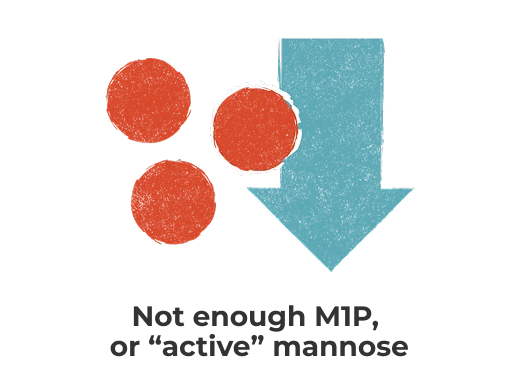
Patients with PMM2-CDG cannot make as much mannose-1-phosphate (M1P)
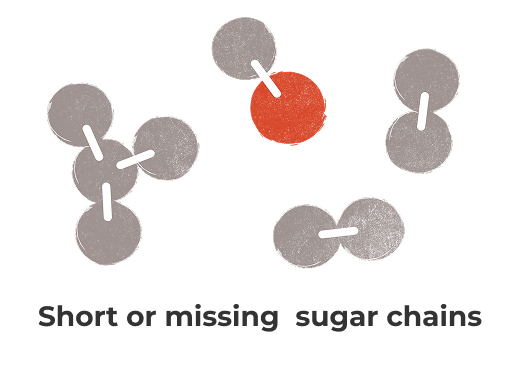
Without enough M1P, glycans cannot be built in the
right way
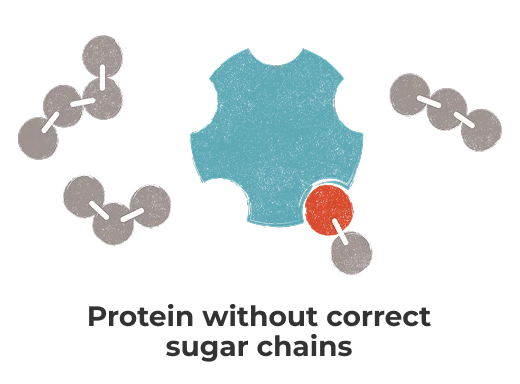
When proteins don’t have the right glycans, they can’t work as well as they should